 Chat with us
Welcome to Our Company





 Send Inquiry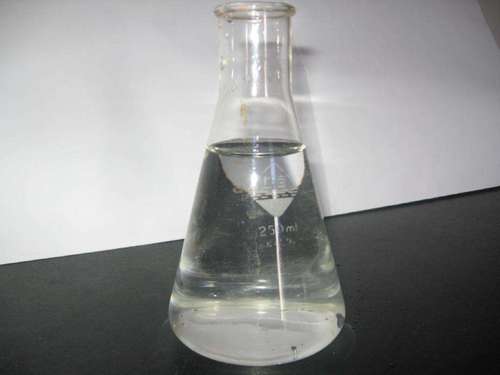
Triethylamine Liquid
Product Details:
- Storage Room Temperature
- Purity 98%
- Density 0.726 Gram per cubic centimeter(g/cm3)
- Structural Formula (C2H5)3N
- Solubility Water Soluble
- Application Industrial
- Physical Form Liquid
- Click to View more
X
Triethylamine Liquid Price And Quantity
- 1 Kilograms
Triethylamine Liquid Product Specifications
- -114.7 degree centigrade.
- Industrial
- 11-12.
- Liquid
- (C2H5)3N
- Water Soluble
- 98%
- 0.726 Gram per cubic centimeter(g/cm3)
- Room Temperature
Product Description
As an aliphatic amine Triethylamine Liquid is used as suitable homogeneous catalyst to conduct transesterification reaction between dimethyl carbonate and glycerol to produce glycerol dicarbonate. Available in clear transparent liquid form, this chemical is well known for its stable attributes under different temperature conditions. Ph value of this chemical is 12.7 (100 g/l) at 15 degree C temperature. This product offered by us has gone through quality testing procedures to prove its premium quality. Standard shelf life, balanced content, non toxic composition and reasonable price are the key features of this chemical.
Uses of Triethylamine:
Triethylamine (TEA) is a versatile organic compound with a chemical formula (C2H5)3N. It is a colorless, volatile liquid with a strong and distinct amine odor. Triethylamine finds application in various fields due to its unique properties and reactivity. Some common uses of triethylamine include:
1. Chemical Synthesis: Triethylamine is widely employed as a base in chemical reactions, serving as a catalyst or reagent in various organic transformations. It can be used to deprotonate acidic compounds, enabling reactions that require basic conditions.
2. Pharmaceuticals: Triethylamine is used in pharmaceutical research and manufacturing. It can be used as a reagent for the synthesis of various drug molecules, such as antibiotics, antivirals, and analgesics.
3. Polymer Industry: Triethylamine is utilized in the production of polymers and plastics. It acts as a catalyst in polymerization reactions, helping to control the molecular weight and structure of the polymer products.
4. Agrochemicals: Triethylamine is involved in the synthesis of agrochemicals like herbicides, insecticides, and fungicides. It can be used to create active ingredients or intermediates in the production of these compounds.
5. Dye and Pigment Manufacturing: Triethylamine is used in the production of dyes and pigments. It can be employed as a stabilizer, pH adjuster, or catalyst in various dyeing processes.
6. Gas Scrubbing: Triethylamine is utilized in gas scrubbing systems to remove acidic impurities (e.g., carbon dioxide and hydrogen sulfide) from gases, thereby helping to purify the gas streams.
7. Cleaning Agents: Triethylamine is incorporated into cleaning agents and detergent formulations as an alkaline additive to improve their performance in removing grease, oils, and other organic residues.
8. Rubber and Plastics Industry: Triethylamine is involved in the production of rubber additives and plasticizers.
9. Photography: Triethylamine has been used in photography as a component of certain developing solutions.
Triethylamine Properties:
Triethylamine (C2H5)3N is an organic compound with a chemical structure that consists of three ethyl groups (C2H5) attached to a central nitrogen (N) atom. Here are some key properties of triethylamine:
1. Physical State: Triethylamine is a colorless liquid at room temperature.
2. Odor: It has a strong, fishy, and ammonia-like odor, typical of amines.
3. Density: The density of triethylamine is approximately 0.726 g/cm3 at 20 degree centigrade.
4. Melting Point: Triethylamine has a relatively low melting point of around -114.7 degree centigrade.
5. Boiling Point: The boiling point of triethylamine is approximately 89.5 degree centigrade.
6. Solubility: It is soluble in a variety of organic solvents such as ethanol, ether, benzene, and chloroform. However, it is only slightly soluble in water due to its weak base nature.
7. pH: Triethylamine is a weak base and forms a basic solution in water. Its aqueous solutions typically have a pH around 11-12.
8. Vapor Pressure: The vapor pressure of triethylamine is relatively high, making it volatile and capable of forming vapors at room temperature.
9. Molecular Weight: The molecular weight of triethylamine is approximately 101.2 g/mol.
10. Chemical Reactivity: As a tertiary amine, triethylamine is nucleophilic and basic, which makes it useful in a variety of chemical reactions, particularly in organic synthesis.
11. Flammability: Triethylamine is flammable, and its vapors can form explo sive mixtures with air.
12. Toxicity: Triethylamine is considered toxic, and exposure to high concentrations or prolonged exposure can cause respiratory, skin, and eye irritation. It should be handled with care and in well-ventilated areas.
FAQ:
Q: What is Triethylamine?
A: Triethylamine, often abbreviated as TEA, is an organic compound with the chemical formula (C2H5)3N. It is a colorless, volatile liquid with a strong and characteristic amine odor.
Q: What are the main uses of Triethylamine?
A: Triethylamine has several applications, including being used as a base in chemical synthesis, a catalyst or reagent in various organic reactions, a pharmaceutical intermediate, in the production of polymers and plastics, agrochemicals, dyes, and pigments. It is also used in gas scrubbing, cleaning agents, and the rubber and plastics industry.
Q: Is Triethylamine hazardous?
A: Yes, triethylamine is considered hazardous and should be handled with care. It has a strong odor, can cause respiratory, skin, and eye irritation, and can form expl osive mixtures with air. Proper safety precautions, such as using protective equipment and adequate ventilation, should be followed when working with triethylamine.
Q: How does Triethylamine smell like?
A: Triethylamine has a strong, fishy, and ammonia-like odor, which is typical of amines.
Q: What is the melting point and boiling point of Triethylamine?
A: Triethylamine has a melting point of around -114.7 degree centigrade and a boiling point of approximately 89.5 degree centigrade.
Q: Is Triethylamine soluble in water?
A: Triethylamine is only slightly soluble in water due to its weak basic nature. However, it is soluble in various organic solvents like ethanol, ether, benzene, and chloroform.
Q: What is the pH of Triethylamine in water?
A: Triethylamine is a weak base, and its aqueous solutions typically have a pH of around 11-12.
Q: What are the risks associated with Triethylamine exposure?
A: Exposure to Triethylamine vapors or liquid can cause respiratory, skin, and eye irritation. Prolonged or high-level exposure can be harmful to health.
Q: Can Triethylamine catch fire?
A: Yes, Triethylamine is flammable and can catch fire if exposed to an ignition source.
Q: What precautions should be taken when working with Triethylamine?
A: When working with Triethylamine, it is essential to use appropriate personal protective equipment, work in well-ventilated areas, and follow local regulations and guidelines for handling, storage, and disposal of the chemical.
High-Quality Triethylamine Liquid for Industrial Use
Our Triethylamine Liquid is meticulously manufactured to maintain a purity of 98%, ensuring consistent performance for industrial needs. Its water solubility and adaptable physical properties enable seamless integration into a range of chemical processes. Distributed across India, this product aligns with international standards and is backed by a robust supply chain for prompt delivery.
Ideal Storage and Safe Handling
Triethylamine Liquid should be stored at room temperature in a well-ventilated, dry area to preserve its stability and effectiveness. With a low melting point and alkaline pH, proper handling protocols are essential. Our team provides comprehensive guidance on safe storage and application for industrial customers.
FAQ's of Triethylamine Liquid:
Q: How should Triethylamine Liquid be stored to maintain its quality?
A: Triethylamine Liquid should be stored at room temperature in tightly sealed containers, away from moisture and incompatible substances. This ensures the compound retains its stability and effectiveness throughout its shelf life.Q: What are the common industrial applications of Triethylamine Liquid?
A: Triethylamine Liquid is primarily used as a catalyst, neutralizing agent, and intermediate in the production of pharmaceuticals, agrochemicals, polymers, and dyes. Its high purity and solubility make it ideal for various chemical manufacturing processes.Q: When is the best time to use Triethylamine Liquid during a chemical process?
A: Triethylamine Liquid is typically introduced during the intermediate or neutralization stages of chemical synthesis, depending on the desired reaction or formulation requirements.Q: Where can I source Triethylamine Liquid in India?
A: Triethylamine Liquid can be procured from reputable distributors, exporters, manufacturers, suppliers, and traders across India. Our company serves as a reliable source, offering timely deliveries and quality assurance.Q: What is the process for safely handling and transferring Triethylamine Liquid?
A: Personnel should use appropriate protective equipment such as gloves, goggles, and lab coats. Ensure proper ventilation and avoid contact with incompatible materials during the transfer and handling process to minimize risk.Q: How does the high purity of Triethylamine Liquid benefit industrial operations?
A: With a 98% purity, Triethylamine Liquid minimizes impurities in end-products, enhances reaction efficiency, and contributes to consistent batch quality in industrial applications.Tell us about your requirement

Price:
Quantity
Select Unit
- 50
- 100
- 200
- 250
- 500
- 1000+
Additional detail
Mobile number
Email

Other Products in 'Speciality Chemical ' category



 Send Inquiry
 Send SMS
VCARE MEDICINES
GST : 27AEKPB3528C1ZX
GST : 27AEKPB3528C1ZX

- Shop No : C-13, First Floor, Shree Ram Industrial Estate, GD Ambekar Marg, Wadala,Mumbai - 400031, Maharashtra, India
- Phone :08045812810

- Mr Suneet Bhutta (Director)
- Mobile :08045812810
-
 suneetbhutta@vcarewellness.com

|


VCARE MEDICINES
All Rights Reserved.(Terms of Use)
Developed and Managed by Infocom Network Private Limited.
Developed and Managed by Infocom Network Private Limited.

