 Chat with us
Welcome to Our Company





 Send Inquiry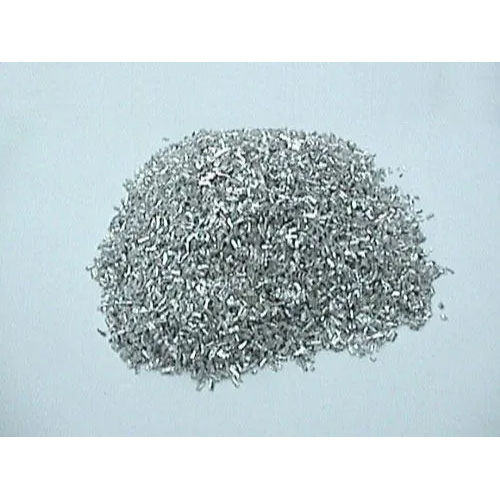
Magnesium Metal Turning
250.00 INR/Kilograms
Product Details:
- Shelf Life 12 Months
- Product Type MAGNESIUM METAL TURNING
- Physical Form Granule
- Application Industrial
- Storage Room Temperature
- Purity 99%
- Grade Industrial Grade
- Click to View more
X
Magnesium Metal Turning Price And Quantity
- 25 Kilograms
- 250.00 INR/Kilograms
Magnesium Metal Turning Product Specifications
- MAGNESIUM METAL TURNING
- Granule
- 12 Months
- 99%
- Room Temperature
- Industrial Grade
- Industrial
Magnesium Metal Turning Trade Information
- Days
Product Description
Due to the reactive nature of the metal, it is crucial to exercise specific caution when working with magnesium metal turning. When exposed to an ignition source, such as sparks or heat, magnesium is highly flammable and rapidly ignites. It can also have a strong reaction with oxidising substances, acids, and water. As a result, it's essential to handle magnesium metal turnings in a controlled setting and to adhere to the necessary safety precautions. It includes a process of shaping or cutting magnesium metal into tiny. Usually, a lathe or another type of machining instrument is used to produce the turning.
FAQ:
Q. Is magnesium metal turning safe?
Ans: Magnesium metal turning can be hazardous due to magnesium's flammability. When machining magnesium, the generated chips and fines can ignite spontaneously, leading to fires or explo sions. It is essential to follow strict safety guidelines, provide proper ventilation, use fire suppression systems, and train operators to handle magnesium safely.
Q. Which industries commonly use magnesium metal turning?
Ans: Magnesium alloys are popular in industries such as aerospace, automotive, electronics, and medical devices due to their lightweight and high strength-to-weight ratio. Turning is commonly used to shape magnesium parts and components in these industries.
Q. What type of cutting tools is best for magnesium turning?
Ans: Carbide or high-speed steel cutting tools are commonly used for magnesium turning. These materials offer high hardness and wear resistance, which is essential for machining magnesium alloys effectively.
High-Purity Magnesium Metal Granules
This product features magnesium metal turnings in a granule form with a purity level of 99%. Ideal for industrial use, it delivers efficient reactivity and consistent results for applications such as chemical synthesis, alloy production, and pyrotechnic manufacturing. The granulated form enhances handling safety and process versatility.
Convenient Storage and Reliable Shelf Life
Magnesium Metal Turning should be stored at room temperature in a dry, well-ventilated area to maximize its 12-month shelf life. The stable physical form of granules helps prevent oxidation and makes it easier to weigh and dispense, supporting operational efficiency and material longevity in your facility.
FAQ's of Magnesium Metal Turning:
Q: What are the primary industrial applications of Magnesium Metal Turning granules?
A: Magnesium Metal Turning granules are used in alloy production, pyrotechnics, chemical synthesis, and pharmaceutical manufacturing due to their high reactivity and purity.Q: How should Magnesium Metal Turning be stored to maintain its quality?
A: Store the granules at room temperature in a dry, well-ventilated area, away from moisture and incompatible substances, to preserve purity and extend shelf life.Q: When is it recommended to use industrial-grade magnesium metal over other grades?
A: Industrial-grade magnesium metal should be used for manufacturing and applications where 99% purity is required, especially when product quality and performance reliability are essential.Q: Where can I source high-quality Magnesium Metal Turning in India?
A: You can obtain Magnesium Metal Turning from leading distributors, exporters, manufacturers, suppliers, and traders across India who specialize in industrial-grade materials.Q: What is the process for handling and using magnesium metal granules safely?
A: Use non-sparking tools and store the material properly. Avoid ignition sources and handle it in controlled environments to prevent unwanted reactions or hazards.Q: What are the benefits of choosing magnesium in granule form for industrial use?
A: Granulated magnesium is easier to handle, measure, and store safely. Its uniform size ensures consistent reactivity and facilitates efficient processing in industrial applications.Tell us about your requirement

Price:
Quantity
Select Unit
- 50
- 100
- 200
- 250
- 500
- 1000+
Additional detail
Mobile number
Email

Other Products in 'Speciality Chemical ' category


 Send Inquiry
 Send SMS
VCARE MEDICINES
GST : 27AEKPB3528C1ZX
GST : 27AEKPB3528C1ZX

- Shop No : C-13, First Floor, Shree Ram Industrial Estate, GD Ambekar Marg, Wadala,Mumbai - 400031, Maharashtra, India
- Phone :08045812810

- Mr Suneet Bhutta (Director)
- Mobile :08045812810
-
 suneetbhutta@vcarewellness.com

|


VCARE MEDICINES
All Rights Reserved.(Terms of Use)
Developed and Managed by Infocom Network Private Limited.
Developed and Managed by Infocom Network Private Limited.

