 Chat with us
Welcome to Our Company





 Send Inquiry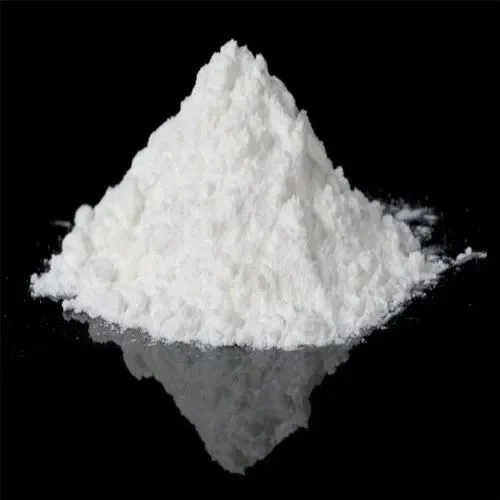
Titanium Dioxide
Product Details:
- Melting Point 1,843 °C
- CAS No 13463-67-7
- Shelf Life 12 Months
- Molecular Formula TiO2
- Molecular Weight 79.866 GSM (gm/2)
- Solubility Water
- Grade Industrial Grade
- Click to View more
X
Titanium Dioxide Price and Quantity
- 5000 Kilograms
Titanium Dioxide Product Specification
- 99%
- 13463-67-7
- 1,843 °C
- Water
- Industrial Grade
- 4.23 Gram per cubic centimeter(g/cm3)
- Powder
- Room Temperature
- 12 Months
- Industrial
- TiO2
- 79.866 GSM (gm/2)
Titanium Dioxide Trade Information
- 7-10 Days
Product Description
Titanium dioxide (TiO2) is a naturally occurring white, powdery substance that is commonly used as a pigment in various industries. It is produced from the minerals ilmenite, rutile, and anatase. Titanium dioxide has a wide range of applications due to its unique properties, including its high refractive index, high opacity, and chemical stability.
Some of the most common uses of titanium dioxide include:
1. Pigment in paints and coatings: Titanium dioxide is widely used as a white pigment in paints, coatings, and inks due to its excellent light-scattering properties, which result in a bright, white appearance and enhanced hiding power.
2. Sunscreen: Titanium dioxide is used in sunscreens and other cosmetic products due to its ability to block and scatter UV rays, providing protection against the harmful effects of the sun's ultraviolet radiation.
3. Food and pharmaceutical industry: It is used as a food additive (E171) to whiten and brighten various food products like candies, dairy products, and chewing gum. In pharmaceuticals, it is used as a coating for tablets and capsules.
4. Plastics and rubber: Titanium dioxide is used in the production of plastics and rubber to improve their opacity and whiteness.
5. Ceramics: It is used in ceramic glazes to enhance opacity and provide a glossy finish.
6. Paper: Titanium dioxide is used in the paper industry to improve the opacity, brightness, and whiteness of paper products.
7. Photocatalyst: Titanium dioxide is a photocatalyst, meaning that it can accelerate certain chemical reactions when exposed to ultraviolet light. This property finds applications in water purification, self-cleaning surfaces, and air purification.
Titanium Dioxide Properties:
- CAS Number : 13463-67-7
- Chemical formula: TiO2
- Molar mass: 79.866 g/mol
- Appearance: White solid
- Odor: Odorless
- Density: 4.23 g/cm3 (rutile); 3.78 g/cm3 (anatase)
- Melting point: 1,843 degree centigrade
- Boiling point: 2,972 degree centigrade
- Solubility in water: Insoluble
- Flash point: not flammable
FAQ:
Q. What is titanium dioxide, and how is it produced?
Ans: Titanium dioxide is a naturally occurring white pigment produced from minerals like ilmenite, rutile, and anatase. It is typically extracted through various chemical and physical processes, including mineral sand mining, sulfate or chloride processes, and purification techniques.
Q. What are the main applications of titanium dioxide?
Ans: Titanium dioxide is used as a white pigment in paints, coatings, plastics, inks, paper, and ceramics. It is also a key ingredient in sunscreen and cosmetic products, where it provides UV protection. Additionally, it has applications in food, pharmaceuticals, water purification, and air purification.
Q. Is titanium dioxide safe to use in consumer products?
Ans: Titanium dioxide is generally considered safe for use in consumer products. However, concerns have been raised about its nanoparticle form, as these particles can potentially penetrate the skin or respiratory system. Most regulations require that nano-sized titanium dioxide particles used in consumer products meet specific safety standards.
Q. How does titanium dioxide provide UV protection in sunscreens?
Ans: Titanium dioxide acts as a physical sunscreen by reflecting and scattering UV radiation away from the skin. It forms a protective barrier on the skin's surface, preventing the harmful effects of UV rays, such as sunburn and skin damage.
Q. What is the photocatalytic property of titanium dioxide?
Ans: Titanium dioxide exhibits photocatalytic activity, meaning it can accelerate certain chemical reactions when exposed to ultraviolet (UV) light. This property allows it to break down organic pollutants in the air or water, making it useful for self-cleaning surfaces, water purification, and air purification applications.
Q. What are the different forms of titanium dioxide used in consumer products?
Ans: Titanium dioxide is available in different forms, including rutile and anatase. Rutile titanium dioxide is more commonly used in paints and coatings due to its higher stability and hiding power, while anatase titanium dioxide is often preferred for photocatalytic applications.
Q. Does titanium dioxide have any environmental impacts?
Ans: Titanium dioxide is generally considered to have low toxicity and does not pose significant environmental risks in its traditional form. However, concerns have been raised about the potential environmental impacts of nanoparticle-sized titanium dioxide if released into the environment.
Q. What safety precautions should be taken when handling titanium dioxide?
Ans: When handling titanium dioxide, it's essential to follow safety guidelines and wear appropriate personal protective equipment, such as gloves and a dust mask, to avoid inhalation or skin contact.
Q. Is titanium dioxide used in foods safe to consume?
Ans: Titanium dioxide used as a food additive (E171) is generally considered safe for consumption in small quantities. However, some studies have suggested possible health concerns with prolonged exposure to high doses of nanoparticles in food, leading to regulatory discussions and ongoing research.
Q. Are there any alternatives to titanium dioxide in consumer products?
Ans: Some alternative white pigments, such as zinc oxide, calcium carbonate, and talc, can be used in certain applications, but titanium dioxide remains the most widely used and effective white pigment in many industries.
Versatile Industrial Applications
Titanium Dioxide is utilized across multiple industries. Its strong pigmenting power enhances the whiteness and brightness of paints, plastics, and paper. In coatings, it improves opacity and weather resistance. Rubber and textiles benefit from its inert chemical nature. As a high-purity grade, it ensures consistent results and meets the rigorous demands of industrial-scale operations.
Exceptional Stability and Quality
Manufactured to industrial-grade standards, this Titanium Dioxide powder offers a purity of 99%. The stable molecular structure allows it to retain performance even under high temperatures and varying environmental conditions. Its easy-to-handle powder form ensures straightforward integration into manufacturing processes, providing reliability in end-product formulations.
FAQ's of Titanium Dioxide:
Q: How is Titanium Dioxide powder commonly used in industrial applications?
A: Titanium Dioxide powder is primarily used as a pigment to enhance opacity and brightness in paints, coatings, plastics, rubber, and paper. Its UV resistance also makes it suitable for outdoor applications, while its chemical inertness ensures compatibility with various industrial formulations.Q: What are the benefits of choosing industrial-grade Titanium Dioxide with 99% purity?
A: Industrial-grade Titanium Dioxide with 99% purity assures high effectiveness in pigmenting and stabilizing products. Its superior purity ensures minimal impurities, resulting in brighter color, better coverage, and improved durability for finished goods across multiple industrial sectors.Q: When should Titanium Dioxide be added during the manufacturing process?
A: It is best to introduce Titanium Dioxide powder during the mixing or compounding stage of manufacturing. This allows for even dispersion throughout the product matrix, ensuring optimal opacity, color, and UV resistance in the final output.Q: Where should Titanium Dioxide powder be stored for best results?
A: To maintain its quality and effectiveness, Titanium Dioxide powder should be stored at room temperature in a dry, airtight environment. Proper storage prevents moisture absorption and maintains its physical and chemical properties throughout its 12-month shelf life.Q: What is the recommended process for handling Titanium Dioxide safely in factories?
A: When handling Titanium Dioxide powder, it is advisable to use protective gear such as gloves, masks, and goggles to minimize inhalation or contact. Ensure good ventilation, and follow standard industrial safety protocols for powders to reduce dust generation.Q: How soluble is Titanium Dioxide in water?
A: Titanium Dioxide is considered insoluble in water, which is why it serves as an excellent pigment and filler. Its insolubility contributes to its durability and long-lasting properties in manufactured products.Tell us about your requirement

Price:
Quantity
Select Unit
- 50
- 100
- 200
- 250
- 500
- 1000+
Additional detail
Mobile number
Email

Other Products in 'Speciality Chemical ' category



 Send Inquiry
 Send SMS
VCARE MEDICINES
GST : 27AEKPB3528C1ZX
GST : 27AEKPB3528C1ZX

- Shop No : C-13, First Floor, Shree Ram Industrial Estate, GD Ambekar Marg, Wadala,Mumbai - 400031, Maharashtra, India
- Phone :08045812810

- Mr Suneet Bhutta (Director)
- Mobile :08045812810
-
 suneetbhutta@vcarewellness.com

|


VCARE MEDICINES
All Rights Reserved.(Terms of Use)
Developed and Managed by Infocom Network Private Limited.
Developed and Managed by Infocom Network Private Limited.

